Sunday, March 10, 2013

The Twilight Saga: Breaking Dawn Part 2


Director: Bill Condon
Starring: Kristen Stewart, Robert Pattinson, Taylor Lautner, Billy Burke, Michael Sheen.
Written by: Melissa Rosenberg (screenplay) Stephenie Meyer (novel).
Rated PG-13 for
 sequences of violence including disturbing images, some sensuality and partial nudity.

When it comes to the Twilight franchise, I've always existed somewhere in the middle of the spectrum. I fail to comprehend the reason behind the series' immense success, but I also think that the backlash it has received in response to it's popularity is unwarranted. At least, I used to feel that way. That is, until I saw Breaking Dawn Part 2 and was forced onto the naysayers' bandwagon against my will. This movie is about as bad as it gets.

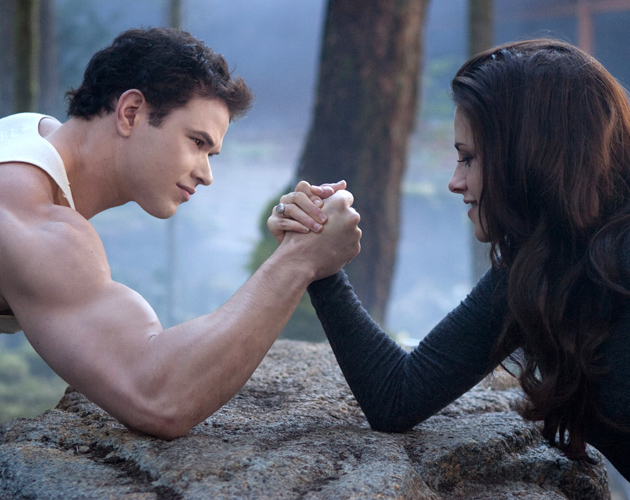
Guess who wins...
You're wrong. 
It's abundantly clear that the decision to split the final chapter into two films was entirely a financial one. There's absolutely no creative excuse for it, and the film suffers tremendously. It's all filler, no killer, if you will. Let me give you a spoiler-free synopsis of this movie: Edward and Bella have to protect their half-human half-vampire baby from the Volturi (who govern all vampires) because they think that the child is a full-on blood sucker, which is bad because vampiric children can't control their thirst, cause wanton destruction and could risk exposing their kind to humans. The Cullens then gather witnesses to meet with the Volturi to prove the child isn't immortal. They all meet in a snow-covered field. Credits. That's it.

This means that the final chapter of the saga is further burdened by the fact that they have to introduce a TON of new characters right before the big finale, which could have been OK were they not all as flat as cardboard. For example, there's "that one vampire who was in the Revolutionary War," which we remember because that's THE ONLY THING HE EVER TALKS ABOUT. The war ended 283 years prior to the events of this film yet he babbles on about it as if America were still fighting for it's independence. That's just lazy writing.

For a $75 million film, it's also not too fun to look at. I couldn't tell if the special effects were trying to stay faithful to the modestly-budgeted original film or if the animators just didn't care enough to make them look convincing. From the way characters run at super-speed, to their use of powers, to the eerie way that the young Renesmee's face looks exactly the same no matter how old she gets (she's seen as an infant to about 17 and every age in between), it's all poorly handled and results in some unintended hilarity.


Look how creepy this thing is!
One of the more interesting aspects of the film is Bella's transformation into a vampire, but it's still pretty underwhelming. She mostly takes to it like a well-worn shoe (aside from a slight incident with a mountain climber, if you can call it that), eliminating any sort of tension that could have come from discovering and controlling her new identity. It's a shame considering the rest of the film is sorely lacking in conflict. Her self-control is supposed to be indicative of her strong-willed character but it seems more like a missed opportunity. I will admit, though, that it's kind of nice to see Kristen Stewart unleashed a bit from the more emotionally-restrictive role of "Human Bella."

Also, I have to give a shout out to imprinting, which is beyond creepy.  I'ms orry but there's no justification for it. The only rational excuse for it's existence as a plot device is that the writer must have felt like Jacob needed some sort of consolation prize. So instead of getting Bella, he gets... Bella's daughter? Who he really doesn't deserve anyway considering he's a petulant, controlling, self-absorbed child who is among the most annoying characters in film history. The worst part? It's not made very clear whether Renesmee has much choice in the matter, which opens up a whole other subject that I don't even want to get into. Moving on...

The derivative anti-climax is sure to please fans of the book with the way that it subverts their expectations while remaining faithful but everyone else will roll their eyes so hard that their optic nerves will be put in jeopardy. The only thing that makes it more insulting is that they had to include a dash of deus ex machina to tie up the remaining loose ends. The best praise I can give is that it's probably as good as it could have been considering the source material, and Michael Sheen's performance as the leader of the Volturi is suitably wacky, acknowledging how ridiculous the whole thing is. He seems to be the only one in on the joke.

Of the franchise's many flaws, this one is the most glaring.
The plot barely moves, the dialogue is cringe-worthy and the acting and directing is incredibly shoddy. It's pretty obvious that most of the cast and crew haven't invested too much love, care or faith in the material, though it's hard to blame them when the studio is just trying to milk their cash cow for all it's worth. The coda includes a bit of fan service that's sure to please and, if I'm being honest, it's unlikely that those who loved the rest of the series will be disappointed with this one. I, however, went in as a mostly indifferent Twilight viewer and found it to be the hole that sunk the franchise ship into the sea of my contempt. I've heard rumblings of a franchise reboot in the near future. Nothing short of imprinting on it will convince me it's a good idea.

1 out of 5

Saturday, March 9, 2013

Top Ten Guilty Pleasure Movies

Even the snobbiest of movie snobs can't deny that there are some horrible movies out there that we can't help but love. Oftentimes nostalgia kicks in and reminds us of another time and place in our lives that we feel compelled to revisit. Sometimes, it's because the movie's so bad that we find new avenues of enjoyment that that the filmmakers may not have intended. Occasionally  it's inexplicable.

Regardless of why, we all have films that we hold close to our hearts but may be embarrassed to admit it. I'm no exception. So, I figured a great way to kick off my Ten Top Ten would be to eschew any potential pretensions I may have and level with you. I like some really terrible movies. Fair warning: you may be shocked, repulsed or downright disturbed by what you you are about to see. These are my cinematic guilty pleasures.


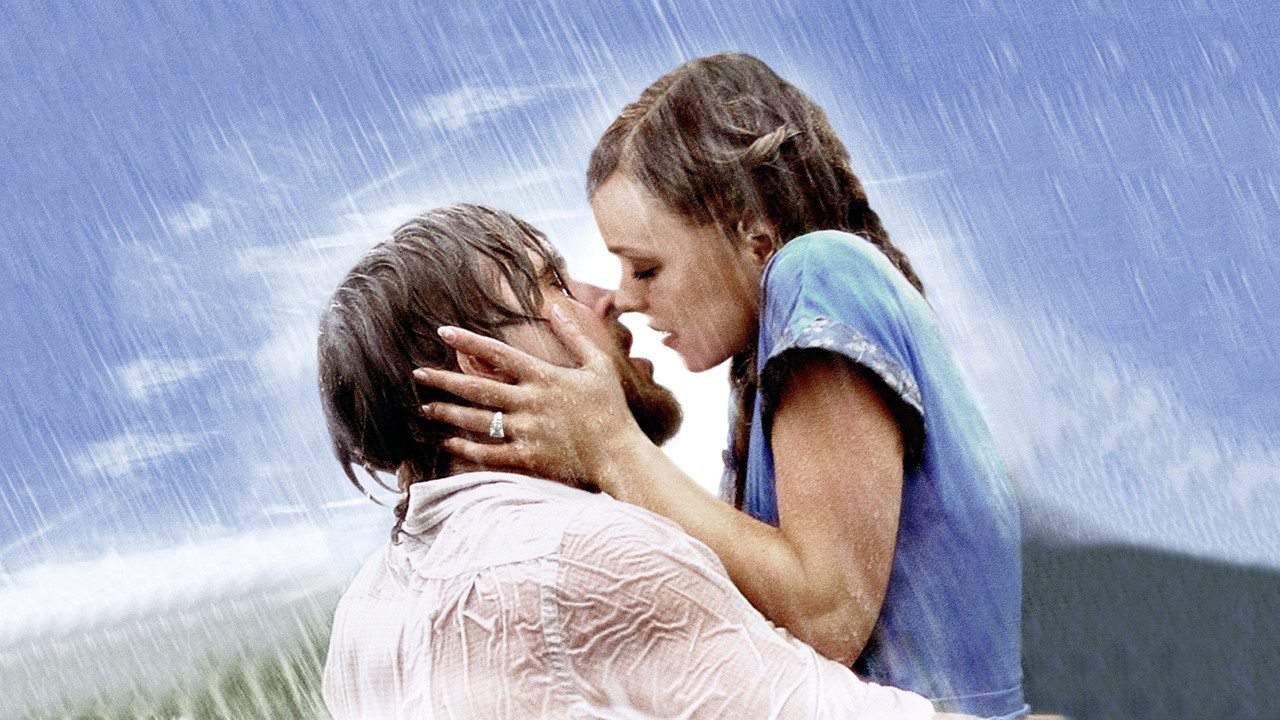
10. The Notebook
Though it's status has been slightly diminished by the onslaught of Nicholas Sparks imitations (mostly, from Sparks himself), I still stand by the fact that The Notebook is one of the best and most enduring pure-romance films of the past decade. It's undeniably romantic, eminently quotable and is quite possibly the greatest date movie of all time. Plus, the chemistry between Ryan Gosling and Rachel McAdams is electric, and solidified them as two of the more bankable stars in Hollywood. It's time to man up, boys, and admit to the world that this movie makes you cry, and you love every second of it 


9. Last Action Hero
Framed around the story of a boy who somehow finds himself transported into the fictional world of his favorite action movie, I still maintain that Last Action Hero is one of the more brilliant satires out there. Arnold Schwarzenegger, being the good sport that he is, sends up the action movie cliches that he helped establish and gives a winking, self-deprecating performance as Jack Slater, a stereotypical action hero who is eventually thrust into the real world and no longer bound by the rules of movies. It's not always as clever as it thinks it is and the kid is quite annoying, but it's all in good fun and there are some interesting musings about the relationship between a writer and the characters that he or she creates. For a young boy (me) who grew up on action flicks, it's quite magical. Plus, it has a scene with Arnold as Hamlet. What more could you ask for?


8. Teenage Mutant Ninja Turtles
This one coasts by almost entirely on nostalgia. I can't tell you how many times I watched this movie as a kid. So much so that I was still able to quote most of the film many years after I had moved on from the lovable heroes in a half shell. Looking back, I'm surprised by how dark the film is (both in terms of storytelling and the visual palette) and by how much the animatronic turtle suits still hold up, especially since little else does. Still, it's so goofy and unpretentious that I can't help but love it. It's a story about humanoid turtles... that are ninjas. What you see is what you get. Oh, it also spawned a sequel. And this slice of fried gold.


7. Mighty Morphin' Power Rangers: The Movie
This is another staple of my childhood. Aside from Back to the Future, I've probably seen this movie more than anything else. It is simply... AWESOME! There, I said it. The film opens with a fairly exhilarating sky-diving sequence, has an army of ooze people, some re-animated dinosaur skeletons, giant robots and rollerblading. ROLLERBLADING! (I was tempted to write this whole thing in all caps.) It's so over-the-top, unapologetically cheesy and filled with cringe-inducing, pun-laden dialogue (my favorite line: "I have a bone to pick with you!"), it's understandable that people loathed it. However, my love of the show and the mega scenery-chewing of Paul Freeman as the film's villain, Ivan Ooze ensures that I'll never conform to the majority opinion. I'm a Ranger for life.


6. The Boondock Saints
"The Boondock Saints is great!" you say? Well, I think so too, but hop over to it's Rotten Tomatoes page for a second and check out it's approval rating. Go ahead. I'll wait...

20 percent. 20 PERCENT! There are more critics out there that like That's My Boy than The Boondock Saints. Think about that for a moment. It's almost enough for me to reconsider my job aspirations. For those that haven't seen it, all you need to know is it has the man who eventually becomes Daryl Dixon, and Willem Dafoe dresses in drag. You're welcome.


5. Bad Boys II
...is such a bad movie. It's absolutely horrible. It's profane, cruel, beyond stupid, waaaaaayyyyy too long, ugly, Martin Lawrence, and morally repugnant to even the most open of minds. But, Michael Bay's single-minded insistence on topping himself with escalating action set pieces is mind-boggling. Say what you will about the man as a director, but he really knows how to blow stuff up in the most spectacular of fashion. Skip all the stuff in between and marvel at how much destruction the Fresh Prince and  Big Momma can cause without consequence. Dare I say, it's a work of art.


4. Little Nicky
This one gets points mostly for the fact that it's easily the weirdest thing that Adam Sandler has ever done and, by extension, one of the most creative. This zany high-concept comedy tasks Sandler with playing Nicky, the sweet-natured son of the devil (Harvey Keitel in a perfectly nutty performance) who must go to Earth to prevent his two brothers from literally unleashing Hell there. Filled to the brim with a cast of funny faces and excellent cameos (including Quentin Tarantino as a blind doom-spewing priest), the movie is so wacky that it's impossible for me not to succumb to its odd charms.


3. Joe Dirt
Some people would probably rather have Christopher Walken stab them in the face with a soldering iron than to have to watch this again, but I think Joe Dirt succeeds as the white trash alternative to Forrest Gump. Joe's quest to find his parents is sort of endearing and he imparts wisdom like a redneck sage. It must be the mullet. While it's excessive toilet humor wears thin after a while, Joe Dirt excels due to it's memorable cast of characters, great soundtrack and Mr. Dirte's ability to "keep on keepin' on" in the face of adversity. It's a garden. Dig it.


2. Space Jam
You know what? On second thought, there's no shame in this. Space Jam is great. Moving on.


1. Batman and Robin
This is it. The Cardinal Sin of movie geekdom. Any self-respecting Batman fan knows that this is the worst thing to happen to the Caped Crusader since... well... ever. The auteur of awful, Joel Schumacher directs the Batman franchise into the ground with Arnold Schwarzenegger's incessant puns, the overly broad acting, the camp tone and, of course, Batsuit nipples. Still, it's one of those movies in which their existence is so puzzling that I can't help but keep coming back to it and enjoying it for the strange beast that it is. A heaping of nostalgia doesn't hurt. It was a lot of fun as a kid.It's also comforting to know that if this hadn't been such a mess then we may not have had Christopher Nolan's masterful trilogy some years later. So, it's a good history lesson.

As you can probably tell, I'm reaching here. This one is about as inexcusable as it gets. I can't really explain it, but Batman and Robin is my ultimate guilty pleasure. Since I'm doing a poor job at justifying my love for such a train wreck, I'll let Mr. Freeze explain it for me:

Thursday, June 14, 2012

Chronicle


Director: Josh Trank
Starring: Dane DeHaan, Alex Russell, Michael B. Jordan.
Written by: Max Landis (screenplay) Max Landis, Josh Trank (story).
Rated PG-13 for intense action and violence, thematic material, some language, sexual content and teen drinking.


I’ve never been thoroughly convinced that the found-footage genre has been a good thing for Hollywood. Instead of acting as a meaningful extension of the story, it’s typically employed as a cheap studio gimmick to minimize investment and maximize returns. Cloverfield is the only film in the genre that's really impressed me. Seeing it on the big screen is the closest a film has ever come to imitating the exhilaration of a roller coaster ride. Unfortunately, it still suffers from many of the shortcomings that have always held the format from achieving greatness: poor shot composition, limited perspective, vomit-inducing shakiness and that lingering question in the back of everyone’s mind, “Why don’t they just put the camera down and run away?”


DiCap... I mean, DeHaan delivers a fierce performance.
Chronicle circumvents every single criticism levied at faux-documentaries by making it integral to the story’s impact. High-school senior, Andrew Detmer (played to unsettling perfection by Dane Dehaan), is defined by his camera. He documents his every move, preferring to view the world around him through a window rather than dealing with the defects of his life head-on. His mother is slowly being eaten away by cancer. His father, an alcoholic, abuses him. He chronicles his interactions with them as a means to help him cope with the toll that it’s taken on his well-being.

The only person that Andrew speaks to is his cousin, Matt (Alex Russell), a self-proclaimed philosopher. He does his best to improve Andrew’s morale but he rarely prevails. It’s evident that their relationship doesn't really exist outside of Matt giving Andrew a ride to school – a place where he eats lunch alone and is bullied mercilessly. Carrying a bulky camera around on his shoulder doesn't help matters.

Experiencing the world from Andrew’s perspective is enthralling and never feels less than real, which is key to what prevents the film’s biggest conceit from falling apart. Eventually Andrew and Matt, accompanied by fellow classmate Steve (Michael B. Jordan), stumble upon a supernatural phenomenon and develop telekinetic powers. What could have been a jarring transition ends up feeling very natural because of how grounded the characters are. The illusion of reality is never once broken (except those LEGOs looked pretty fake.)

Chronicle is more than an absorbing character study, it’s an inventive take on the superhero genre because writer, Max Landis (son of John), drops the word “hero” from his vocabulary altogether. The boys here harbor no guilt for their newfound abilities, and do not insist on using their powers for good. They do what any average teenager would do: they wreak innocent havoc in the name of fun.

The three "afflicted" young men begin to develop a tight bond with one another. (So close, in fact, that when one is in trouble, the others are signaled with a nosebleed.) Andrew’s new-found companions and developing abilities act as a catalyst for his changing demeanor. His camera is no longer a scapegoat for his insecurities. Why hide behind a camera when you can levitate it? (which works wonders for composition, by the way). He trains his lens on himself and his friends, fascinated by the gifts that they've inexplicably received. He routinely pores over the footage for clues on how to unlock their true potential.

Josh Trank, in his directorial debut, has solidified himself as a filmmaker to keep an eye on. He excels at making intimate moments feel grand and is obviously very good at making his actors feel comfortable with one another. The three leads are having a blast and their interactions are a lot of fun to be a part of. For those of us who have seen the previews, it’s no surprise when Chronicle's more sinister undertones are unearthed. The shock is in how much you care about the severe repercussions of their ever-expanding powers.

To explain what I mean without spoilers, Chronicle is best viewed as an allegory for the dangers of teenage repression and isolation. I’m sure that many people will be able to identify with some of the struggles that our “heroes” have to endure; which is great because, ultimately, it cautions kids by showing them exactly what happens when you forgo the responsibility that comes with such great power. It also just happens to be a fun slice of pop cinema: the kind of film that can only exist when a studio takes a chance on new talent and unconventional themes.


At one point, Andrew identifies himself as the apex predator, calling his seat at the top of the food chain. In a way, I think that’s the perfect way to describe Chronicle. It is the apex of the found footage genre. The only complaint that I could possibly impose on an otherwise brilliant film is that the climax feels a bit bigger than the film that it’s in. In keeping with the found footage look we hop from various recording devices -- ranging from cell phones to security cameras -- to frame the action. Unfortunately, it ends up undermining the otherwise powerful conclusion with unnecessary choppiness (and in some cases, seems to abandon the shooting style altogether.) However, this small distraction doesn't prevent Chronicle from taking its seat on the throne as king of the genre.

4.5 out of 5

Tuesday, June 12, 2012

Mission: Impossible - Ghost Protocol


Director: Brad Bird
Starring: Tom Cruise, Paula Patton, Simon Pegg, Jeremy Renner, Michael Nyqvist.
Written by: Josh Appelbaum,  Andre Nemec (Screenplay), Bruce Geller (TV series).
Rated PG-13 for sequences of intense action and violence.


I grew up on action movies. As a child with a hyper-active imagination, the intricacies of plot and acting didn’t matter much to me. I was just there to see the every-man action hero prevail over the seemingly insurmountable evil that stood before him. I craved fistfights, explosions, and one-liners, but most of all, I wanted to live through these icons and believe that I too was capable of something extraordinary.

"Did I leave the stove on?"
Regrettably, these films are an endangered species. Sure, we’ve got a superhero for every color of the rainbow now but it’s not always easy to relate to the tribulations of genius billionaires (both bat-clad and iron-suited alike) and adolescent web-heads, especially when their adventures rely so heavily on whimsical powers, supernatural villains and special effects.

Enter Mission: Impossible – Ghost Protocol, a refreshingly old-school action flick whose sole goal is to dazzle its audience, not through CG wizardry but through the humanity of its stars (and the insanity of Tom Cruise.) The tension is relentless, the set-pieces are thrilling, and the team dynamic among Cruise and his cohorts is compelling enough to make-up for the film’s lack of a memorable villain.

The story’s simplicity is mind-boggling: Dude's got nuclear launch codes. Stop dude with nuclear launch codes. That’s it. Oh, and then there’s Ghost Protocol: that ominous fine print that reads something like, “Should your mission be compromised, the government will disavow any knowledge of your existence.” You’ve probably heard something to that effect in numerous spy films before, but here the plot device is actually put into motion and brilliantly ups the stakes for our heroes by leaving them without back-up.

The Cruise Crew
Ethan Hunt (Cruise), the man that redefines the term “impossible,” is back with a team comprised of: the butt-kicking babe, Jane (Paula Patton), the wise-cracking hacker, Benji (Simon Pegg) and the unwitting “analyst,” Brandt (Jeremy Renner). Pay no heed to my back-of-the-box descriptions of these characters. They all defy the pitfalls of action-film clichés by being fully-developed people with conflicting feelings regarding the extreme situation they’ve been put in. Each one is personally invested in the mission beyond the world-ending consequences should they fail.

Unfortunately this attention to detail also makes it glaringly obvious that the antagonist, Kurt Hendricks (Michael Nyqvist), is as flat and docile as his name might imply. Arguably, the villain should be the most interesting character in an action film. The hero can be excused for lacking a defined personality because he/she acts as the avatar for the audience. The bad guy, however, should always act as the good guy’s MacGuffin -- driving them indefatigably towards their goal -- by taking a unique stance against something that is universally accepted as “good.”

A truly great villain can even evoke sympathy towards their plight by truly believing their actions are to the benefit of mankind. This is something that is hinted at throughout the film but, ultimately, it doesn't work. Hendricks harbors none of the characteristics of a great nemesis. He lacks menace. And his rationale for why he wants to destroy the world is never elaborated further than “life needs to start over sometimes.” It’s incredibly frustrating to see such a provocative philosophy go to waste in an otherwise top-notch thrill-ride.

See what I mean?
Though I will admit, said thrills do almost make up for this oversight. Director Brad Bird (making an undeniably impressive live-action debut) has streamlined the Mission: Impossible franchise into a breathless adrenaline generator; able to turn even the simplest of tasks -- such as hopping onto a meandering train cart -- into an opportunity to keep the viewer on edge. Bird and co. hop from set piece to set piece at a dizzying pace and compromises nothing in the process. There are at least three scenes here that rival the best that similar films have to offer.

The high point of high points is the much-hyped Burj Khalifa climb, where Cruise clambers up the side of the world’s tallest building. You might want to bring an inhaler, because it’s every bit as asthma-inducing as the ads will have you believe. The vertigo-afflicted among us have been warned.

Renner has exceptional balance
Mission: Impossible – Ghost Protocol is so much fun that it forced the kid in me to claw his way to the surface. I can imagine myself reenacting the insanity onscreen by climbing up trees, chasing down neighborhood kids on bicycles and fighting for an object that will “save the world.” For me, that’s the best praise I can give an action film. Sure, the plot isn’t anything original. And maybe the villain doesn’t live up to the standards set by the likes of Hans Gruber and the Terminator, but when you have a movie as expertly made as this, it doesn’t matter. Ghost Protocol ranks among the classics of the genre and is easily the best film in the M:I franchise

4.5 out of 5

Saturday, April 21, 2012

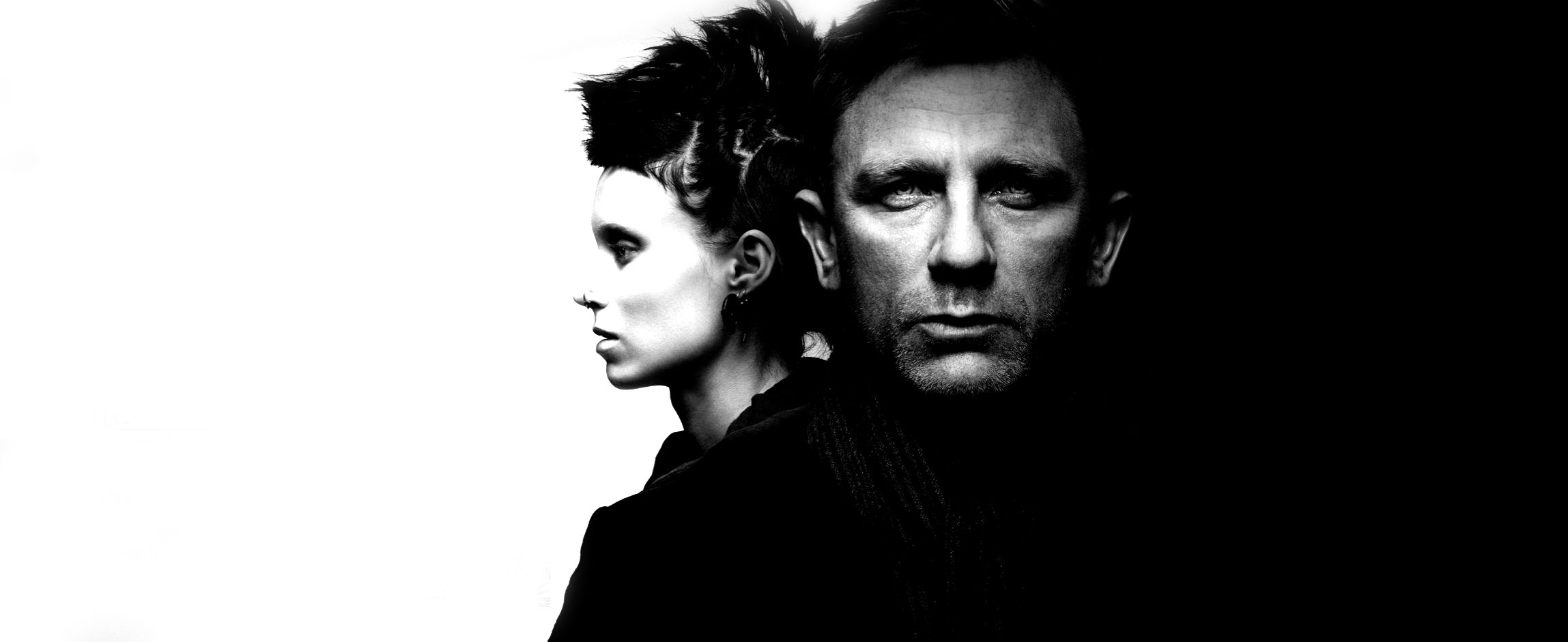
The Girl with the Dragon Tattoo (U.S.)


Director: David Fincher
Starring: Daniel Craig, Rooney Mara, Christopher Plummer, Stellan Skarsgård, Robin Wright.
Written by: Steven Zaillian (Screenplay), Stieg Larsson (Book).
Rated R for brutal violent content including rape and torture, strong sexuality, graphic nudity, and language
.

David Fincher first solidified himself as a director of merit with the 1995 film, Seven (sorry, Alien 3.) The grimy, atmospheric thriller about a serial killer whose victims exemplified the Biblical seven deadly sins was both a critical and commercial success that catapulted his career into the Hollywood stratosphere. He would return to the murder mystery genre with the 2007 film Zodiac to similar critical albeit less commercial success. Now it’s 2011 and Fincher is once more dipping into the well with The Girl with the Dragon Tattoo. Luckily for us, the auteur is as smooth as he's ever been.

His fluidity is reflected most apparently in the camera’s lens. Each shot within the film is meticulously framed and flawlessly executed, rarely relying on the modern convention of handheld cameras. As a result, the camera never bobs or shakes. An uneasy tranquility pervades each and every scene, perfectly capturing the gloomy subject matter.

Nestled snugly within Fincher’s frames is a tight and compelling mystery. Disgraced journalist Mikael Blomkvist (Daniel Craig) is hired by the wealthy and mysterious Henrik Vanger (Christopher Plummer) to investigate the disappearance of his niece, Harriet, who vanished some 40 years ago. And then there’s the titular girl with the dragon tattoo, Lisbeth Salander (Rooney Mara); the woman hired by the Vangers to pull the background check on Blomkvist. Eventually, their paths converge and the mystery kicks in proper; more on that later.

Before they meet we’re treated to a lengthy expository section detailing the backgrounds of both our hero and our heroine (not to mention the loony Vanger family.) During this portion of the film their stories can feel a bit disassociated: Blomkvist is beginning his investigation, and attempting to escape from his libelous past, by moving into a shack on the Vanger family’s personal island. Salander is dealing with the repercussions of the failing health of her legal guardian. The result of which puts her in the “care” of lawyer Niles Bjurman who uses his position of power to sexually abuse her.

Like I said, The Girl with the Dragon Tattoo takes longer than most films to build up its momentum but it certainly doesn’t detract from the overall story. It serves as a means to excellent characterization for all parties; the most involving of which is, of course, Salander. Rooney Mara really came out of nowhere to snag the role and it's easy to see why. She’s fierce, fearless, and nothing less than real; able to convey Lisbeth’s inner animosity and instability without sacrificing the vulnerability that defines her pathos.

Her introspection and idiosyncrasies have most likely led to her profession as a computer hacker (and an exceptional one at that.) When Mikael decides that he needs a research assistant, the Vangers naturally inform him of Lisbeth’s expertise. The two then plunge headlong into the absorbing and complex tale of murder and misogyny. It’s fairly disturbing stuff but it’s morbidly fascinating and your investment in the characters ensure your investment in their investigation, along with the dark places it leads them.

See what I mean! No cell phone coverage!
The atmosphere is juxtaposed with a very past-meets-present aesthetic. Lisbeth and Mikael work in old, weathered buildings yet have modern technology at their disposal to aid in their research. They’ll search through dusty, disheveled libraries to find documents and pictures which they’ll scan into their laptops for added utility. It works as a subtle parallel to the Vanger family history and the mystery itself (it may even offer a clue!). As more of the past is brought into the present, more of the enigma is brought to light.  From the opening credits (a visually-arresting scene that plays to Karen O and Trent Reznor's thumping Led Zeppelin cover) to the final scene, it persistently feels like the past is attempting to prevent the characters from pursuing, or submitting to, their future.

There’s an unexpectedly thrilling climax here but it’s almost undone by the prolonged epilogue. It doesn’t exactly bother me. I’m all for closure (which you don’t really get anyway) but I couldn’t help but be taken out of the experience a bit as I watched the film slowly crawl to a close. You reach a point of catharsis and then you’ve got twenty or thirty minutes to go as the movie resolves the unresolved and you twiddle your thumbs.

Minor pacing issues aside, The Girl with the Dragon Tattoo is a thoroughly engrossing thriller. It’s the rare big-budget film that’s unapologetically made for adults. The central narrative is complex, the characters are morally ambiguous, and the themes are potentially unsettling but, like the biting cold of Sweden, it consumes you. Only in the case of Fincher’s film, you don’t want it to let go.

4 out of 5

Saturday, April 14, 2012

Inglourious Basterds


Director: Quentin Tarantino
Starring: Brad Pitt, Christoph Waltz, Mélanie Laurent, Eli Roth, Michael Fassbender, Daniel Bruhl.
Written by: Quentin Tarantino
Rated R for strong graphic violence, language and brief sexuality.

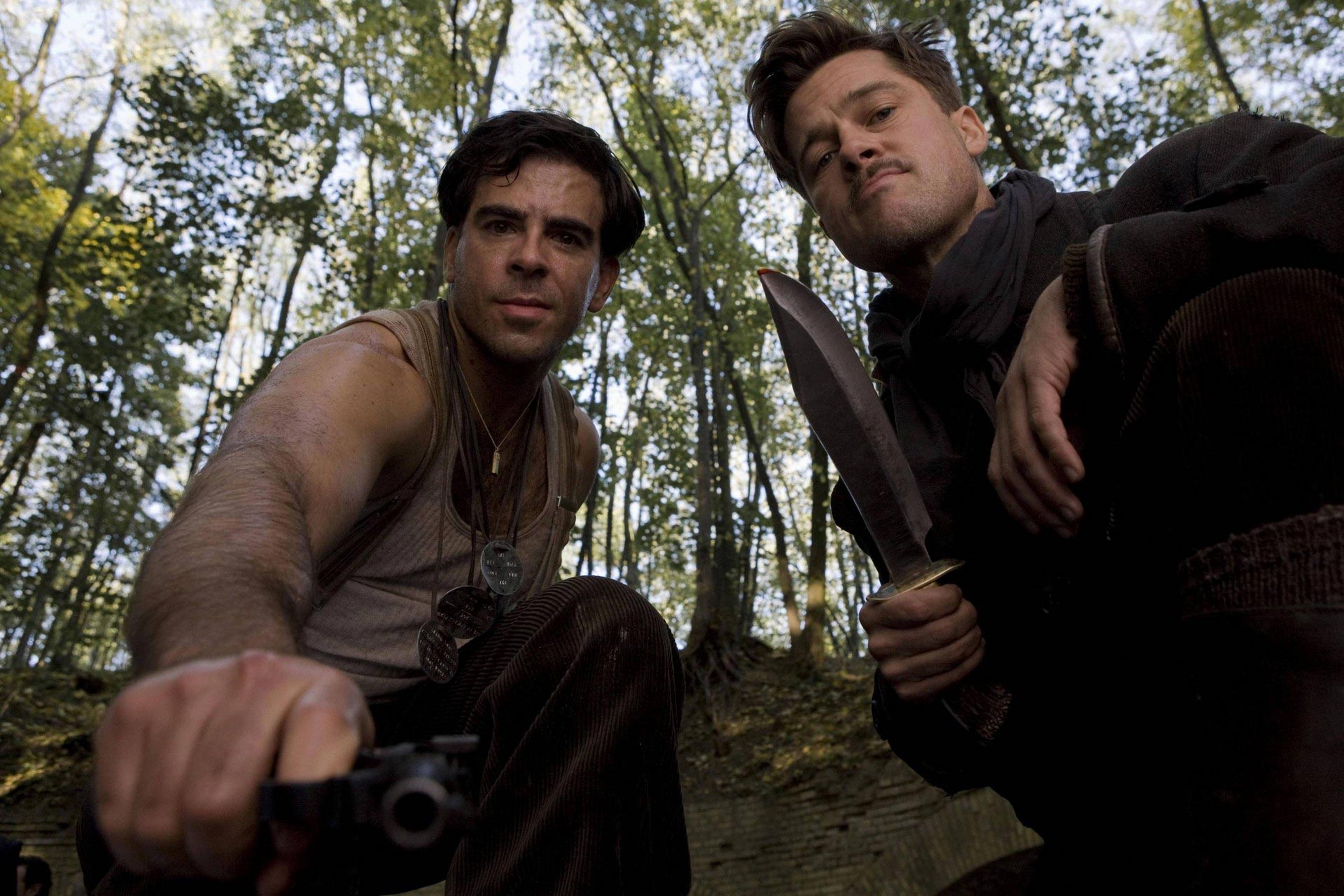
Contrary to the previous film I reviewed, Quentin Tarantino’s Inglourious Basterds takes a more over-the-top approach to its World War II setting. The characters are colorful, the situations are often absurd and, despite its moments of gravity, there’s plenty of humor throughout that gives this film a greater sense of levity than most war films. Tarantino’s film is like watching a comic-book western set within Nazi-occupied France.

Watch out for this guy.
I’ve seen the film twice now. The first time I watched it, I wasn’t sure how I felt about it. It wasn’t what I expected. For a film called Inglourious Basterds, you really don’t see too much of them. They serve more as bookends to the film (Not counting the brilliant and incredibly tense prologue.) Also, I found the dialogue to be well-written but a bit self-indulgent. The seemingly incessant discussions of German cinema seemed to be less like entertainment and more like Tarantino showing off his knowledge (and obvious affection) of film.

Now that I’ve watched it a second time I enjoyed it a bit more (maybe because it was midnight when I watched it the first time.) When I kept my expectations in check, the dialogue didn’t feel quite so pretentious, the two-and-a-half-hour runtime didn’t drag as much, and viewing it as more of an ensemble piece helped to curb my initial disappointment. There was still some lingering dissatisfaction though. The myriad supporting characters are so well fleshed out but we only get to know something like four of the nine, or so, Basterds. Some of them don’t even have speaking roles.


...and don't give him any milk.
Those that do speak, however, ignite the screen. Brad Pitt is hysterical as Southern bootlegger turned ruthless Nazi scalp-taker, Aldo Raine: leader of the Basterds. His gruff accent, combined with a plethora of witty one-liners and overt facial expressions make him the comedic highlight of the film. However, that shouldn’t be seen as a slight against Christoph Waltz and his Oscar-winning portrayal of SS Col. Hans Landa. He’s able to elicit a hefty helping of laughter coupled with a seething layer of menace. You never feel safe when he’s on-screen because you’re never really quite sure what he’s going to do next.

That’s really the best thing about Inglourious Basterds. It’s always looking for ways to subvert your expectations. It’s something that I initially didn’t embrace but, once I did, it turned out to be a fun yet slightly bumpy ride. The film may seem insensitive regarding its subject matter, impartial to its characters, and detached from its narrative but, in the grand scheme of it all, it mostly works because it holds your attention in ways that few movies can: by always keeping you guessing; which is why I’m going to defer from going deeper into the story and let you go see it for yourself.

4 out 5

Saturday, March 24, 2012

Schindler's List


Director: Steven Spielberg
Starring: Liam Neeson, Ben Kingsley, Ralph Fiennes.
Written by: Steven Zaillian (Screenplay), Thomas Keneally (Book: Schindler's Ark).
Rated R for language, sexuality, and actuality violence. 

Schindler’s List tackles the Holocaust in a manner unlike any other film on the subject. Its unflinching portrayal of one of the world’s darkest moments in history really gives you a sense of how truly horrific an experience it must have been. I've sat through many a history lesson, seen countless films, and even “experienced the war first-hand” in some WWII-based games, but nothing has ever stirred up the emotions from within in the way that Steven Spielberg has with this film. For anybody that truly wants to understand the tragedy, and just how deplorable -- or how selfless -- human beings can be, this film may be the window into history with the best view.

The horrors within are significantly amplified by Janusz Kaminski's Oscar-winning cinematography.
The handheld look and black-and-white composition (though there are brief flashes of color) make Schindler’s List feel like a documentary. For me, it not only greatly contributes to the grim reality of the situation, it makes the film timeless. It would probably be impossible to guess when the film was made simply by looking at it.

The parameters of Schindler’s List are full of paradox. It’s horrifying and uplifting, intimate but epic, stark yet beautiful. It puts the audience through the wringer and, by the end, you may harbor feelings of anger, depression or even exhaustion, but you may also be inspired, even humbled, by the images
you’ve endured. Spielberg’s film runs the full spectrum of emotions, and no matter how you ultimately feel in the end, you can rest assured in knowing that you witnessed something truly extraordinary.

Within the film, the platform through whom you’ll experience these emotions comes courtesy of protagonist Oskar Schindler (Liam Neeson). The audience sees the events of the film through his eyes, and his experiences and reactions reflect that of the audience. In the beginning, Schindler is merely trying to benefit from the war, using the persecuted Jews for cheap labor. He’s aware of the genocide, but doesn't fully realize the gravity of the situation until he witnesses the massacre for himself. It is then that he uses his newly acquired wealth and his position of power to help save as many lives as possible. A cause that the audience grows more than sympathetic for as they witness Schindler’s transformation from war profiteer to the savior of more than a thousand lives.

Vital to Schindler’s efforts is his unnerving friendship with SS Lieutenant, Amon Goeth (Ralph Fiennes). Goeth is the film’s primary harbinger of death. It’s by his authority that most of the film’s horrors are carried out. Schindler is cautious to befriend him but, in doing so, is able to subtly manipulate Goeth into contributing to his cause.

This scene is undeniably powerful
It feels strange to praise a man’s acting when his character is so despicable (and based on a real person), but Fiennes manages to pull off one of cinema’s most vile villains. What’s even more remarkable is in the way that you feel an odd flash of pity for the man who murders with such indifference. Neeson’s role as Schindler is less flashy but is pulled off with the same commanding presence and a bit more dynamism. When they share the screen, you won’t blink. Watching the two size each other up is one of the film’s few moments that will have you sitting with a smile on your face.

Though Schindler’s List was released in 1993, I’m still going to forgo discussing major scenes in detail. Though I doubt there’s much I could do to lessen the film’s impact, I'm not even going to risk it. Doing so would be a major disservice to the audience, the film, and the people depicted within. One thing to keep in mind though: the film is very graphic. The camera never cuts away during scenes of extreme violence, mutilation, and humiliation. Spielberg’s never allowed the film to be censored and I applaud his conviction. Sanitizing the experience of those affected by such circumstances would diminish everything the film stands for.

I don’t know how Spielberg and company pulled off such a tremendous feat. Filming on location in Europe, constructing enormous sets, making everything look great in black and white, keeping up with over 100 speaking roles, directing no less than 30,000 extras, and having it all encompass over three hours of film (all while completing post-production on Jurassic Park) sounds incredibly overwhelming. The crew's work ethic alone is enough to inspire. Luckily, for film-lovers such as me, their exhaustive effort speaks for itself. Schindler’s List may be one of the most important films ever made. It’s not only important for the art-form it represents, but also for a greater understanding of history and human nature. In the right context, anybody can benefit from seeing this film.

5 out of 5